I was recently speaking with a colleague about the critical role the contact center plays within the organization. I explained that the contact center must be the hub of any organization if there is to be a genuine effort to provide outstanding service and products to consumers. This by no means suggests the contact center is the policy maker and authority on business decision. However, I do propose the call center have a seat at the table and a voice in the discussions. To forbid such involvement leaves out the most important stakeholder of any business, the customer.
Customer Service has one unique advantage over most other departments; the customer service department is the recipient of the customer’s feedback. When marketing and sales communicate to your customer base or engage potential customers, the chances are great that customer service agents will hear from them. New products and features introduced will certainly garner opinions from customers. Most often, this lands in support’s phone, email or chat queue. With more companies moving to social media support, the impact to support is now greater as the voice of customer is in the public. Let’s not forget about customer surveys! What better way is there to know the voice of customer.
As such, the contact center serves as the face of the company to the client base. It is they who relay the company message, receive feedback and build relationships. With so much information regarding the customer, it would be wise to glean this information and distribute it to the various departments. To consistently ignore the contact center and view it as a cost center rather than an asset is not wise. Marketing and Sales should be in communication with the call center seeking input concerning the customer’s attitude, behavior, spending habits and tendencies. This collaboration ensures the right customers are not only obtained but retained for years to come.
Customer Service has one unique advantage over most other departments; the customer service department is the recipient of the customer’s feedback. When marketing and sales communicate to your customer base or engage potential customers, the chances are great that customer service agents will hear from them. New products and features introduced will certainly garner opinions from customers. Most often, this lands in support’s phone, email or chat queue. With more companies moving to social media support, the impact to support is now greater as the voice of customer is in the public. Let’s not forget about customer surveys! What better way is there to know the voice of customer.
As such, the contact center serves as the face of the company to the client base. It is they who relay the company message, receive feedback and build relationships. With so much information regarding the customer, it would be wise to glean this information and distribute it to the various departments. To consistently ignore the contact center and view it as a cost center rather than an asset is not wise. Marketing and Sales should be in communication with the call center seeking input concerning the customer’s attitude, behavior, spending habits and tendencies. This collaboration ensures the right customers are not only obtained but retained for years to come.
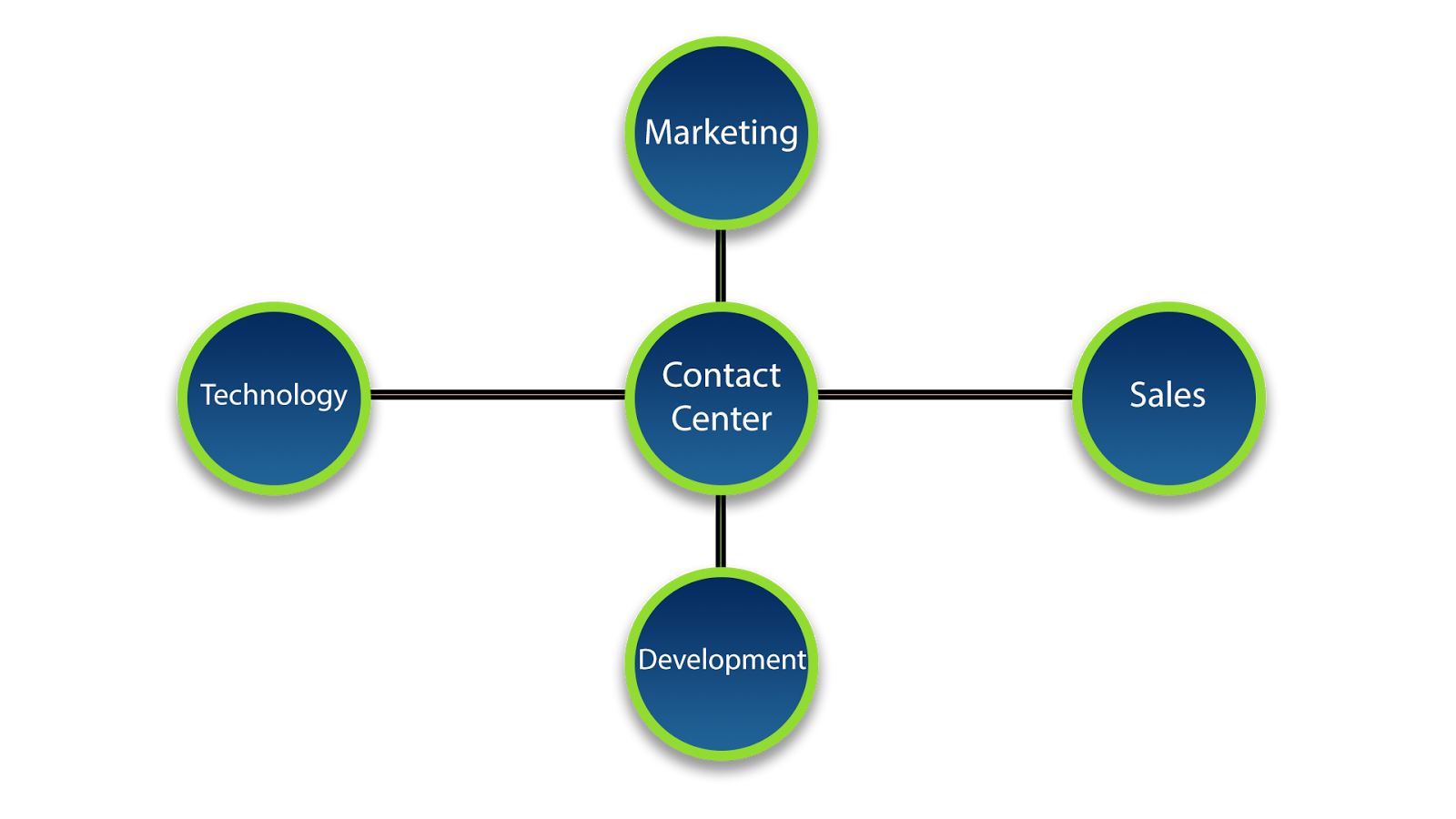
Also, our CRM I set up to collect customer feedback regardless of the channel received. Anyone with permissions can easily access the information. Valuable information can be gathered by reviewing this information. For example, technology can better prioritize software bugs or the development team will have a better sense of the new features/products customer are requesting.
In addition, the support staff can better assist customers based on the information they are receiving. Our marketing team provides the support leadership their promotional and newsletters in advance. Thus, we’re able to ask questions and get clarity to better assist the customer. Yes, it all comes back to the customer!
Those in the contact center are well equipped to communicate the voice of customer throughout our respective company. For the sake of the customer and the company, it’s worth the effort to ensure we are communicating internally and externally. To be done correctly, the contact center must be bridge the customer and all internal departments.

Sean is a
Customer Experience, Contact Center and Help desk manager with over 12
years of experience. He has a terrific pulse on incorporating innovation
into the contact center. He's implemented social, outsourcing partners,
new technology, and new products, while maintaining an award-winning
contact center.
In 2011, his team was awarded the ICMI "Global Call Center of the Year" for Small to Medium-Sized Centers. Follow on Twitter @SeanBHawkins
In 2011, his team was awarded the ICMI "Global Call Center of the Year" for Small to Medium-Sized Centers. Follow on Twitter @SeanBHawkins

